Showing posts with label mobile phone. Show all posts

Wednesday, 15 April 2015

Work Smarter, Not Harder: Five Best Apps for Improving Productivity


You’ll see from the title of today’s blog, that the intention was to write about the best apps for improving your productivity.

Unfortunately, not everything went to plan…

We picked an office guinea pig to try each of these apps out, and whilst things started off well, it would be incorrect to suggest that productivity for today was increased for all.

Streamlining your phone

The first apps we played with were Opera Max, and CleanMaster, both available for free on iOS and Android.

Opera Max is designed to manage your data. It compresses videos, images, and other media to save your mobile data usage, and to speed up mobile browsing. It also self-pauses when your WiFi is turned on. It’s relatively useful if you regularly find yourself paying for data at the end of the month, but if you have a good mobile phone plan, like those on offer here at Fivebars Mobile, you probably have more than enough data already.

CleanMaster installs a ‘1 Tap Boost’ button onto your home screen, so that you can perform regular ‘sweeps’ of junk that slows down your phone’s performance. Our guinea pig for this app says:

“I decided to really test this out, so before installing it, I trawled through my phone, deleting every cache, every extraneous file. Once installed CM managed to clear another 1.3GB of ‘junk’ – I’m sold!”

Self-motivation

An app that was recommended to us recently was Carrot – which bills itself as a to-do list with a personality. Sadly it is only currently available on iOS, but is fairly priced at £2.29.


The idea behind Carrot is that she already doesn't like you. If you tick off the tasks in your to-do list, you can appease your mini-robot master, but if you fail, Carrot Will Not Be Happy. It’s definitely fun, but whether you get more done than “Task one: write to-do list. Task two: check off task one” just to raise your level, remains to be seen.

Social media

As anybody who uses social media for their business knows, you can easily spend hours on Facebook and Twitter trying to reach everyone. This is where apps like Fenix, and IF come in handy.

Fenix is reasonably priced at £3.69, on Android, and is one of the most consistently well-reviewed third-party Twitter clients available. It allows you to customise how you view your Twitter account, and lets you manage multiple accounts. Our guinea pig would definitely recommend this for people who find themselves tweeting a lot throughout the day.

This brings us to IF. Also known as IFTTT – if this then that.
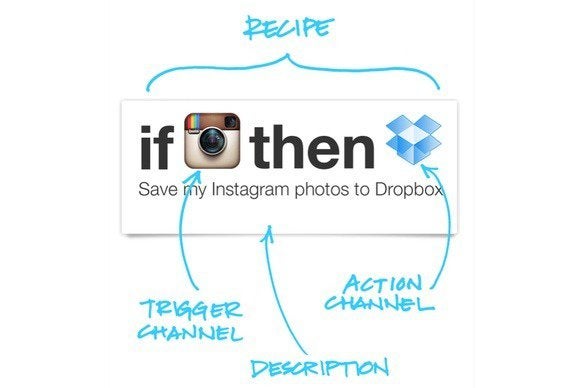


We’d love to give you a review of this amazing connecting app, but despite having installed it nearly three hours ago, our guinea pig is still playing with it…


The basic premise is that it allows you to connect different apps, by adding ‘recipes.’ These recipes do things like automatically making your latest Instagram photo your screen pic, or sending you an email reminder if you miss a call from your mum. Or, hopefully, switching your employee’s phone off if they miss more than three meetings in a row…

Monday, 23 March 2015

A Chinese Takeover

A lot of press inches have been given over recently to Apple and Samsung – the two giants of the smartphone world. But as greater expectations are placed on a brand, there are always two possible outcomes: greater prices, and/or disappointment. As such, the attention of many tech blogs has turned to the smartphones coming out of China. Often dismissed as poor copies of their Western rivals, we’ll show you that there are plenty of Chinese smartphones more than ready to hold their own in a global market.

Lenovo

Founded in 1984, it’s very likely that you’ll have heard of Lenovo, especially since their hiring of actor Ashton Kutcher as product engineer and spokesperson. However, the company are still more well-known for their computers and tablets than their smartphones.

One to watch: Look out for the Lenovo Vibe Z2 Pro. This 7.7mm metal smartphone has clean, edgy lines, and packs a 4,000mAh battery.

Huawei

Given their status as the largest telecom equipment manufacturer in the world, Huawei is a familiar name. We wrote last week about Huawei’s wearables from MWC15 – with their Android Wear watch more than holding its own against competitors from Apple and LG.

Ones to watch: The Huawei Ascend Mate 2, with a 6.1” display, offers excellent value for money, whilst the Ascend Mate 7, with a 6” display, has an attractive 7.9mm metal body, industry-leading fingerprint sensor, and a 4,100mAh battery. The Huawei Honor 6 Plus houses an innovative dual camera sensor, with two 8MP sensors allowing for better photography in low-light conditions.


Xiaomi

Pronounced shao-me, the company was founded in 2010, and is proving itself to be something of a game-changer. Makers of the bestselling affordable smartphone in Asia, the Redmi, Xiaomi are sometimes referred to as the “Chinese Apple” due to both the perceived design similarities, and the legions of dedicated fans.

Ones to watch: The Xiaomi Redmi Note, an almost unbeatable combination of quality and affordability in phablet form.

The Redmi 2 – a 4.7” screen, with 720 x 1280 display, running on a Snapdragon 410 64-bit quad core chip. If you can get hold of one, an excellent introduction to Xiaomi’s products.

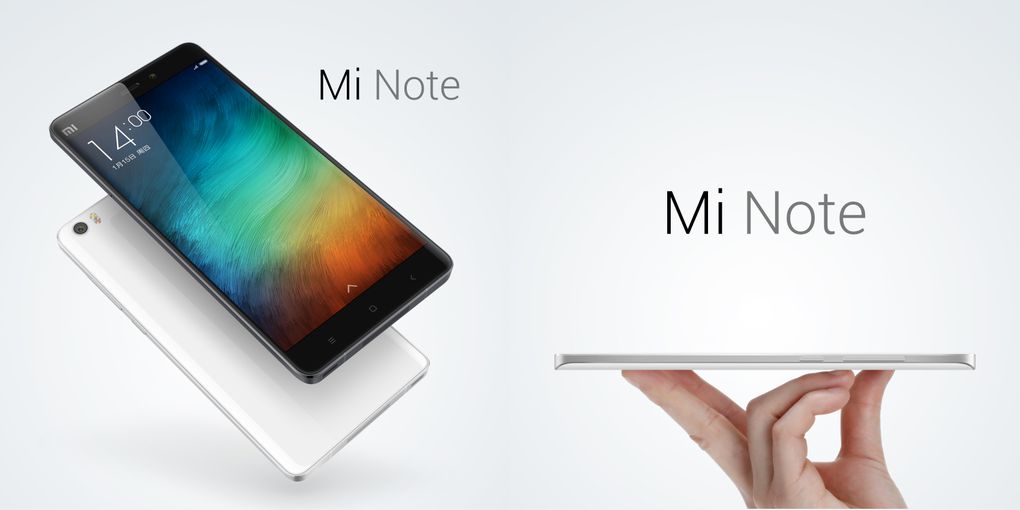
The Xiaomi Mi Note. Described by many as the best Chinese smartphone, although not easily available outside of Asia. The Mi Note runs on a 2.5GHz Snapdragon 801 chip – not quite as powerful as the OnePlus One’s Snapdragon 8.1, but none too shabby – and has a 5.7”, 1,920 x 1,080 display. This is a larger screen than the iPhone 6Plus, but both thinner and lighter.


The Mi Note combines enough innovative new features, with familiar, comfortable ones, to make it incredibly usable. Despite the OS no longer requiring capacitive buttons, the Mi Note features three on the bottom bezel – I for one prefer this set-up. The structure of the phone is a metal ‘body’ fixed between front and back Gorilla Glass 3, with a slight curve making it more comfortable to hold.

Perhaps the most interesting feature is the custom MIUI Android skin, described as “strikingly refreshing” in comparison to Samsung’s TouchWiz.


If you’re looking for the best mobile phones for you and your employees, as well as the best support for your business, look no further than Fivebars Mobile.

Thursday, 12 March 2015

Let’s Talk About Six, Baby…

The past fortnight has been a busy time in the world of mobile phones – we’ve seen the launch of Samsung’s latest Galaxy products, Mobile World Congress in Barcelona, and of course the Apple Watch and Apple Watch Edition. In the next few blog posts we’ll offer our take on the various gadgets being released this year, and what they will offer to the business world.
A galaxy not so far away
The first major launch event of the season was for the Samsung Galaxy S6, and the S6 Edge. There have been rumours, leaks, and suspicions for months about these latest additions to the Galaxy line. After the disappointing sales of the S5, most industry commentators felt that Samsung needed to do something different. And they most certainly did.
The first thing that you’ll notice about the S6 and the S6 Edge is the design. Samsung have eschewed their slightly plasticky go-to look, and modernised the S6 with a glass and metal handset. This was a necessary move, as the high-end product no longer matched its less-than-premium feel. It is still light, weighing in at around 138g – the equivalent of about 14 or 15 pound coins, and just five grams heavier than the S5. The iPhone 6 weighs 129g, and the 6 Plus, 172g. Of these four handsets, the S6 Edge – weighing 32g – offers the best size to weight ratio, due to the curved edges.

Plus ça change
Obviously, when you are making such changes to an already established line, there will be some dissent. The more new features, and the greater the risk.
Some of the new features in the S6 and the Edge were definite crowd-pleasers at the launch event. Both handsets offer fast WPC and PMA wireless charging; the S6 will give four hours of use after just ten minutes of charging, and can charge from 0-100% in around half the time of the iPhone 6.
The potential downside to this is that Samsung have done away with the removable battery. It remains to be seen whether this is a feature that users will miss.
As well as the lack of removable battery, the new design does not allow for the addition of extra memory via an SD card, however different capacity handsets are available. There have also been a few comments regarding the lack of stylus for the S6, but with the modern curved sides of the Edge, the consensus in the Fivebars office is that a stylus would look outdated and old-fashioned next to such a clean, metal and glass design.
The question on everybody’s lips is “how much will it cost?” As is common with tech launches, Samsung did not indicate a price – it is likely that they want to gauge reception first. Nonetheless, at least one company are taking pre-orders for the S6 for £579. As with any mobile phone, the price will depend very much on the deal, and the dealer. For the best in business mobile contracts, contact us.


Monday, 23 February 2015

The Smartphone Patent Wars

As we’ve mentioned before on this blog, the mobile phone and operating system you choose is often quite a territorial decision. It’s a bit like living in London – if you are born and bred in Bermondsey, then Swiss Cottage might give you nosebleeds, whereas if you are from North of the river and get invited to a party in Elephant & Castle, you’ll probably use any excuse you can think of to avoid going that far South.
We’ve got Android, Apple, BlackBerry, and Windows users in the office, and Friday night drinks can sometimes get a little bit heated as we compare size, specs, and prices.
But we are going to let you in on a secret…
It doesn’t matter!
Or, rather, it only matters to the lawyers.


Android vs. iOS
There have been more than fifty lawsuits worldwide between representatives of Apple phones and Samsung phones, and whilst it is the patent suits between these two companies that usually get all the press, the very first suit in the so-called ‘Smartphone Patent Wars’ was Nokia vs. Apple.
The original federal complaint in the ongoing battle between Samsung and Apple was made in April 2011, against several Samsung phones and tablets. Specific claims included “patent infringement, false designation of origin, unfair competition, and trademark infringement.” 
Since then there have been a number of both vague, and specific, claims made by each company against the other.
Both utility and design elements have been called into question, for example the “pinch to zoom” function, which is now found on most devices, as well as methods of synching, and certain parts of the mobile infrastructure technology.
In one British case in July 2012, with Samsung demanding that Apple admit their Galaxy tablets were not iPad copies, a judge ruled in favour of Samsung. His ruling included the somewhat double-edged statement that the Galaxy tablets “do not have the same understated and extreme simplicity which is possessed by the Apple design” and that Galaxy’s tablets “are not as cool.”
An end to the war
Thankfully, as of June 2014, both Samsung and Apple have signed an agreement to end all lawsuits outside of the U.S. 
This doesn’t mean that the suing and counter-suing will end, but it should simplify matters somewhat.
Going forward
Whilst the very nature of published patents means that your rivals can see what you’re up to, it also means that we – as consumers and enthusiasts – can gain access to the sorts of rumours that we love.
As well as the rumours regarding the upcoming Galaxy S6, some of the patents that have been awarded to Apple recently have seen speculations about the iPhone 7.
We know that Apple have been awarded a patent related to 3D GUI (graphical user interface), which might mean the inclusion of 3D capabilities in the new phone. There is also a patent which hints at Apple trying to combat the brittle screen problems they have had with past models.

For the best deal on your business phones, and for the latest information about mobile phones, visit Fivebars Mobile.

Image - metserve.com

Friday, 30 January 2015

Is 2015 the year of Quadruple Play?

Quadruple Play, or Quad Play, is the name given to services that provide a customer with mobile, internet, landline, and television. It’s an area that is growing in the US and in Europe, but will 2015 see Quad Play take off in the UK?
Why choose Quad Play?
There are three main factors in a customer’s decision regarding their TV, phone and data provision:
  • cost
  • convenience
  • quality
In order for Quad Play to attract customers, they need to provide competitive packages, with good quality products. The big selling point for buying all four services from one provider, is the convenience. You would be paying just one bill per month, and the hope is that it would be cheaper than the four individual bills. However, along with the convenient combination of services, also comes the increased potential for technical problems. Companies wishing to move into Quad Play provision must counter this with swift and excellent customer service.
It is also important for the consumer to remember that buying a bundled service makes it harder to switch one component. If you have a 12 or 24-month contract for all four services from one provider, but find that their broadband speed is insufficient, or their mobile network coverage is patchy in your area, it can be really tricky to change your deal.
This is why it is important to consider the details of the packages, as well as their price.


The competition
Currently, the only major player in terms of Quad Play provision is Virgin Media, who were also the first company to offer Quad Play. Beginning as a merger of NTL and Telewest, the acquisition of Virgin Mobile in 2006 has meant almost a decade of building on their unique position. As of 2012, Talk Talk have also offered all four services, but have yet to make much of a dent in the TV market.
The number of Quad Play providers is only likely to increase over the next twelve months, with Sky planning to roll-out mobile services next year, using Telefonica’s network.
In theory, Sky are in a great position to capitalise on their position, as their TV package is considered by many to be the most extensive – particularly as they keep certain channels, such as Sky Atlantic, only available via their own service.
BT – already providing businesses with mobile services – is also said to be in talks with EE. It is particularly interesting to note that BT are moving ‘full circle’ after selling BT Cellnet – their original mobile network – to Telefonica in 2005, becoming O2. Before proposing the current deal with EE, BT had also been considering a re-purchase of O2.
If the deal is finalised, it is very likely that BT would nudge Virgin Media into second, in terms of Quad Play companies’ share of the revenue. EE themselves currently hold over a third of the UK mobile market by revenue.

The way of the future
There is no doubt that more and more companies are seeking to provide Quad Play service, but it is vital that customers do not get swayed by the advertising, and the freebies, but continue to demand excellent service for their money.
Whilst at Fivebars Mobile we don’t (yet!) provide Quad Play, we do offer excellent value for money, and outstanding customer service. If you’re looking for a new deal on your business phones, have a look at our website, and try our free, no-obligation Tariff Review.