Monday, 23 March 2015

A Chinese Takeover

A lot of press inches have been given over recently to Apple and Samsung – the two giants of the smartphone world. But as greater expectations are placed on a brand, there are always two possible outcomes: greater prices, and/or disappointment. As such, the attention of many tech blogs has turned to the smartphones coming out of China. Often dismissed as poor copies of their Western rivals, we’ll show you that there are plenty of Chinese smartphones more than ready to hold their own in a global market.

Lenovo

Founded in 1984, it’s very likely that you’ll have heard of Lenovo, especially since their hiring of actor Ashton Kutcher as product engineer and spokesperson. However, the company are still more well-known for their computers and tablets than their smartphones.

One to watch: Look out for the Lenovo Vibe Z2 Pro. This 7.7mm metal smartphone has clean, edgy lines, and packs a 4,000mAh battery.

Huawei

Given their status as the largest telecom equipment manufacturer in the world, Huawei is a familiar name. We wrote last week about Huawei’s wearables from MWC15 – with their Android Wear watch more than holding its own against competitors from Apple and LG.

Ones to watch: The Huawei Ascend Mate 2, with a 6.1” display, offers excellent value for money, whilst the Ascend Mate 7, with a 6” display, has an attractive 7.9mm metal body, industry-leading fingerprint sensor, and a 4,100mAh battery. The Huawei Honor 6 Plus houses an innovative dual camera sensor, with two 8MP sensors allowing for better photography in low-light conditions.


Xiaomi

Pronounced shao-me, the company was founded in 2010, and is proving itself to be something of a game-changer. Makers of the bestselling affordable smartphone in Asia, the Redmi, Xiaomi are sometimes referred to as the “Chinese Apple” due to both the perceived design similarities, and the legions of dedicated fans.

Ones to watch: The Xiaomi Redmi Note, an almost unbeatable combination of quality and affordability in phablet form.

The Redmi 2 – a 4.7” screen, with 720 x 1280 display, running on a Snapdragon 410 64-bit quad core chip. If you can get hold of one, an excellent introduction to Xiaomi’s products.

The Xiaomi Mi Note. Described by many as the best Chinese smartphone, although not easily available outside of Asia. The Mi Note runs on a 2.5GHz Snapdragon 801 chip – not quite as powerful as the OnePlus One’s Snapdragon 8.1, but none too shabby – and has a 5.7”, 1,920 x 1,080 display. This is a larger screen than the iPhone 6Plus, but both thinner and lighter.
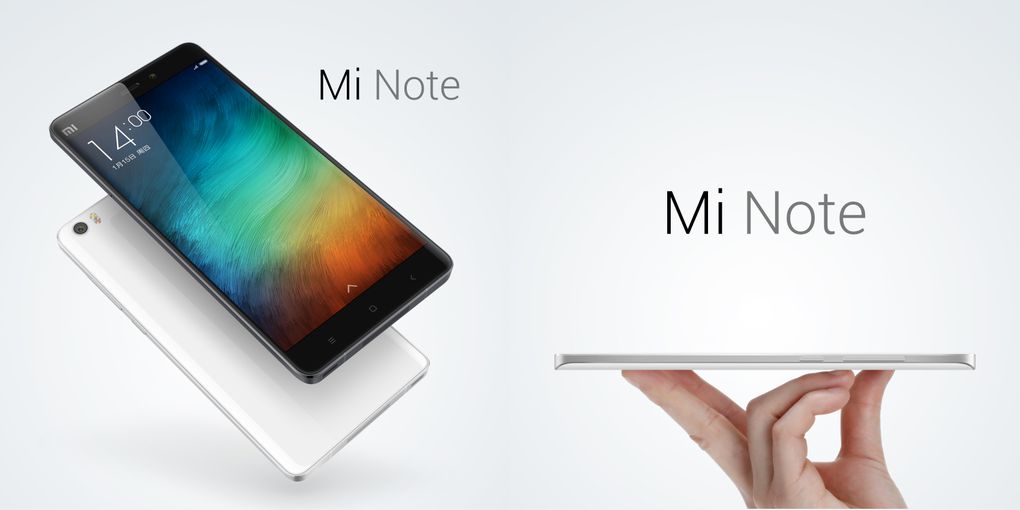


The Mi Note combines enough innovative new features, with familiar, comfortable ones, to make it incredibly usable. Despite the OS no longer requiring capacitive buttons, the Mi Note features three on the bottom bezel – I for one prefer this set-up. The structure of the phone is a metal ‘body’ fixed between front and back Gorilla Glass 3, with a slight curve making it more comfortable to hold.

Perhaps the most interesting feature is the custom MIUI Android skin, described as “strikingly refreshing” in comparison to Samsung’s TouchWiz.


If you’re looking for the best mobile phones for you and your employees, as well as the best support for your business, look no further than Fivebars Mobile.

Tuesday, 17 March 2015

Mobile World Congress 2015: The Highlights


Last week’s Mobile World Congress in Barcelona saw over 93,000 visitors, from 200 countries. So much went on that it would be impossible to cover everything in one blog post, but we’ve trawled through all the product launches, all the speeches, and all the awards, to bring you the best of the best of MWC15.

Wearables

With rumours of Apple’s now-launched ‘iWatch’ doing the rounds in the run up to MWC, both Huawei, and LG debuted their upcoming wearable devices.

www.smarterwaching.com


Huawei offered their latest Android Wear watch, with circular display, text, email, and phone call notifications, and a number of fitness features. They also demoed the TalkBand B2 and TalkBand N1, which they say are designed for the business-person on the run. The TalkBand B2 received somewhat mixed reviews for its ability to be transformed into a Bluetooth earpiece.

LG launched two watches, the LG Watch Urbane, and the Watch Urbane LTE. The Urbane is stylish, and has a look which many find competitive with designer watches – for those who have, thus far, found the wearable device market to be somewhat lacking in beauty. It also claims a longer battery life than any Android Wear device to date.

arstechnica.com


The LTE, due to its mobile payment capability, uses webOS rather than Android Wear. It was perhaps a little early for both devices to be presented, but LG knew this, and gambled that getting something out there would be better than nothing, in order to have a chance of competing with Apple.

Apps

IBM announced that they have come up with another three iOS apps to add to the ten released last year, as part of their partnership with Apple.

RefMe – an app that has intrigued the Fivebars team for some time now – won best British mobile startup for its free student referencing app. Look out for more on this in an upcoming blog post about some of the best apps for students and academics.

There’s also a new messaging app – YO! – already available on Android devices. It may seem to many to be an already saturated market, but YO!’s offline capabilities make it a potentially major player in the likes of Bangladesh (where it was beta-tested), where limited data plans and slow connections mean that file-sharing isn’t as quick and easy as it is in the west.

Phones

MWC15 saw the 20th Annual Global Mobile Awards, at which over 35 awards were given out in different categories. The phones that stood out were the Apple iPhone 6, and the LG G3 – joint winners of “Best Smartphone” as well as the Motorola Moto E, winner of “Best Low-Cost Smartphone.” Unsurprisingly it was the Samsung Galaxy 6 Edge which won “Best New Handset, Tablet, or Device.”

Honourable mention


As a company who specialise in finding the best mobile phone deal for our business customers, we are always on the lookout for anything that might streamline our work day. As such, IKEA wins our award! Beginning next month, the Swedish furniture company will be selling lamps and tables with Qi wireless charging pads – meaning no more wires everywhere to trip over.

Thursday, 12 March 2015

Let’s Talk About Six, Baby…

The past fortnight has been a busy time in the world of mobile phones – we’ve seen the launch of Samsung’s latest Galaxy products, Mobile World Congress in Barcelona, and of course the Apple Watch and Apple Watch Edition. In the next few blog posts we’ll offer our take on the various gadgets being released this year, and what they will offer to the business world.
A galaxy not so far away
The first major launch event of the season was for the Samsung Galaxy S6, and the S6 Edge. There have been rumours, leaks, and suspicions for months about these latest additions to the Galaxy line. After the disappointing sales of the S5, most industry commentators felt that Samsung needed to do something different. And they most certainly did.
The first thing that you’ll notice about the S6 and the S6 Edge is the design. Samsung have eschewed their slightly plasticky go-to look, and modernised the S6 with a glass and metal handset. This was a necessary move, as the high-end product no longer matched its less-than-premium feel. It is still light, weighing in at around 138g – the equivalent of about 14 or 15 pound coins, and just five grams heavier than the S5. The iPhone 6 weighs 129g, and the 6 Plus, 172g. Of these four handsets, the S6 Edge – weighing 32g – offers the best size to weight ratio, due to the curved edges.

Plus ça change
Obviously, when you are making such changes to an already established line, there will be some dissent. The more new features, and the greater the risk.
Some of the new features in the S6 and the Edge were definite crowd-pleasers at the launch event. Both handsets offer fast WPC and PMA wireless charging; the S6 will give four hours of use after just ten minutes of charging, and can charge from 0-100% in around half the time of the iPhone 6.
The potential downside to this is that Samsung have done away with the removable battery. It remains to be seen whether this is a feature that users will miss.
As well as the lack of removable battery, the new design does not allow for the addition of extra memory via an SD card, however different capacity handsets are available. There have also been a few comments regarding the lack of stylus for the S6, but with the modern curved sides of the Edge, the consensus in the Fivebars office is that a stylus would look outdated and old-fashioned next to such a clean, metal and glass design.
The question on everybody’s lips is “how much will it cost?” As is common with tech launches, Samsung did not indicate a price – it is likely that they want to gauge reception first. Nonetheless, at least one company are taking pre-orders for the S6 for £579. As with any mobile phone, the price will depend very much on the deal, and the dealer. For the best in business mobile contracts, contact us.


Monday, 2 March 2015

Fab Phablets

In the world of mobile phones, you learn to get used to some pretty strange words: smartphone, apps, LOL. In fact, ‘mobile phone’ itself wasn’t added to the OED until 2001 (for reference, an over-breakfast-office-poll suggested that 2000 was about the average year for most of us to get our first mobile phones). However, when it comes to brand new words, ‘phablet’ just about takes the biscuit.


Will it catch on?
‘Phablet’ is what’s known as a portmanteau – a blended word made up of two other words. In general, these sorts of blended words become very popular in the English language, as they are able to express a concept that is often greater than the sum of its parts. Think about the following examples:
  • Blaxploitation (black/exploitation)
  • Brunch (breakfast/lunch)
  • Chillax (chill/relax)
  • Cosplay (costume/play)
  • Craptacular (crap/spectacular)
  • Frenemy (friends/enemy)
  • Gaydar (gay/radar)
  • Metrosexual (metropolitan/heterosexual)
  • Mockumentary (mock/documentary)
We don’t need to know much more than the contributing words to grasp the concept.
But what is a phablet?
It’s a cross between a phone and a tablet, of course!
The phablet emerged from a growing market for smartphones that could encompass ever greater aspects of our lives. We want to carry one device that will be our office, our studio, our entertainment system, and our communications hub. 
The first viable and successful phablet is generally thought to be the 2011 Samsung Galaxy Note, which came with a larger-then-usual 5.3 inch screen. The whole Note series has been remarkably successful, increasing in screen size, stylus functionality, and processing power with each release. The Note 4 has a 5.7 inch screen, a 16MP camera, and was accompanied in release by the curve-finished Note 4 Edge. The Edge packs a whopping 2.7GHz quad-core processor.
The best way to see how the most popular phablets compare is by using them, but that is not a viable option for most people. Hopefully the table below can give you some idea of the performance capabilities of the iPhone6Plus, the Galaxy Note 4, and Google’s Nexus 6.

iPhone6+
Note 4
Nexus 6
5.5 inch screen
5.7 inch screen
5.9 inch screen
1920x1080 pixel resolution
2560x1440 pixel resolution
1.4GHz processor
2.7GHz processor
2.7GHz processor
1GB RAM
3GB RAM
3GB RAM
16GB, 64GB, 128GB non-expandable internal memory
16GB, 64GB, expandable to 128GB internal memory
32GB, 64GB non-expandable internal memory


A table can’t tell you everything, of course. For example, both the Note 4 and Nexus 6 may have a higher screen resolution, using the sharper-looking HD AMOLED screen, but the iPhone’s HD LCD screen uses less power. Also, the iPhone may have less processing power, but they actually require less power, dues to their highly streamlined design, and user experience.
But will the phablet catch on?

There’s little doubt that the popularity of the phablet is only going to grow over the next few years. Galaxy are about to release their much-hyped Galaxy S6, with the accompanying Edge, and here at Fivebars we’ve got our eye on some of the smartphones and phablets coming out of China. Whatever your chosen brand, we can definitely provide you with the best deal for your business phones.

Monday, 23 February 2015

The Smartphone Patent Wars

As we’ve mentioned before on this blog, the mobile phone and operating system you choose is often quite a territorial decision. It’s a bit like living in London – if you are born and bred in Bermondsey, then Swiss Cottage might give you nosebleeds, whereas if you are from North of the river and get invited to a party in Elephant & Castle, you’ll probably use any excuse you can think of to avoid going that far South.
We’ve got Android, Apple, BlackBerry, and Windows users in the office, and Friday night drinks can sometimes get a little bit heated as we compare size, specs, and prices.
But we are going to let you in on a secret…
It doesn’t matter!
Or, rather, it only matters to the lawyers.


Android vs. iOS
There have been more than fifty lawsuits worldwide between representatives of Apple phones and Samsung phones, and whilst it is the patent suits between these two companies that usually get all the press, the very first suit in the so-called ‘Smartphone Patent Wars’ was Nokia vs. Apple.
The original federal complaint in the ongoing battle between Samsung and Apple was made in April 2011, against several Samsung phones and tablets. Specific claims included “patent infringement, false designation of origin, unfair competition, and trademark infringement.” 
Since then there have been a number of both vague, and specific, claims made by each company against the other.
Both utility and design elements have been called into question, for example the “pinch to zoom” function, which is now found on most devices, as well as methods of synching, and certain parts of the mobile infrastructure technology.
In one British case in July 2012, with Samsung demanding that Apple admit their Galaxy tablets were not iPad copies, a judge ruled in favour of Samsung. His ruling included the somewhat double-edged statement that the Galaxy tablets “do not have the same understated and extreme simplicity which is possessed by the Apple design” and that Galaxy’s tablets “are not as cool.”
An end to the war
Thankfully, as of June 2014, both Samsung and Apple have signed an agreement to end all lawsuits outside of the U.S. 
This doesn’t mean that the suing and counter-suing will end, but it should simplify matters somewhat.
Going forward
Whilst the very nature of published patents means that your rivals can see what you’re up to, it also means that we – as consumers and enthusiasts – can gain access to the sorts of rumours that we love.
As well as the rumours regarding the upcoming Galaxy S6, some of the patents that have been awarded to Apple recently have seen speculations about the iPhone 7.
We know that Apple have been awarded a patent related to 3D GUI (graphical user interface), which might mean the inclusion of 3D capabilities in the new phone. There is also a patent which hints at Apple trying to combat the brittle screen problems they have had with past models.

For the best deal on your business phones, and for the latest information about mobile phones, visit Fivebars Mobile.

Image - metserve.com

Friday, 13 February 2015

The Rumour Mill

Last week saw Samsung announce that they will be holding their Galaxy Unpacked 2015 event on the 1st of March, just one day ahead of the GSMA Mobile World Congress 2015 in Barcelona, from the 2nd-5th March.
Samsung’s press event will be focussed on their upcoming Galaxy S6, about which rumours have been rife for some time – particularly following the underwhelming sales of the Galaxy S5.
A bit of background
Historically, Apple and Samsung have been the Pepsi and Coca Cola of the smartphone world. Competitors, rivals, often litigants. You’re either an iPhone user or an Android fan. Windows is still fairly new to the party, and BlackBerry users are in a class of their own.
When it comes to comparing sales figures, it is important to remember that Apple only make the iPhone – there is more to Samsung than the Galaxy line. Nonetheless, when Samsung released the Galaxy S4 in 2013 it equalled the SIII in success – shipping 40million units in the six months following release. Apple have consistently outsold the Galaxy S-series during launch weeks, however, with Samsung releasing in April or May, and Apple in September.
The S5 sold 40% fewer units than the S4, whilst – thanks in part to Apple’s increase in screen size – the iPhone6 and 6Plus sold over three million units in the first three days of release (excluding pre-orders).
Given the disappointing sales of the S5, Samsung have reportedly gone back to the drawing board, giving the S6 a complete, ground-up redesign.

Features
We won’t know the full specs of the Galaxy S6 until March 1st, nor the accompanying phablet release, the Galaxy S Edge. Nonetheless, hints, rumours, and trend-tracking by industry experts means that we can speculate quite well about potential features.
The Galaxy Note 4 had a screen resolution of 1440x2560 pixels, and whilst the S5 had a more modest resolution, it is very likely that the Edge will match or exceed the resolution of the Note 4. It is also likely that Samsung will up the resolution for the S6 – but at what cost to battery life remains to be seen.
Samsung are known for their consistently excellent cameras –the S5 housed a 13MP camera – but with improvements to Samsung’s own ISOCELL technology, we expect the S6 to include a 20MP camera.
In terms of power, leaked specs show that one of the new releases – probably the Edge – will be running Samsung’s own Exynos 7420 power chip, with 3GB of RAM and 32GB of ROM. If this is true, the newest Samsung will be one of the most powerful phones on the market, and their best chance yet of taking an even greater chunk of smartphone sales across the globe.

At Fivebars Mobile we love the iPhone, but we can’t wait to get our hands on the S6 and the Edge. If you are looking for the best mobile phone deal for your business, get in touch and ask about our free tariff review.

Friday, 6 February 2015

#TBT – The Nokia Communicator and Smartphones

Who remembers Nelly? The early 2000’s rapper who wore a plaster on his face. Let’s go back…
Dilemma
In 2002, Nelly released Dilemma with Kelly Rowland of Destiny’s Child fame. In the video we see Nelly and Kelly strike up a complicated relationship, and at one point Kelly appears to send a text:
WHERE YOU AT? HOLLA WHEN YOU GET THIS
She gets no response and flings the phone down in disgust.
Wait. Rewind. If we take a closer look, we can see that Kelly hasn’t written a text message at all; rather she has opened a spreadsheet. A spreadsheet. On a 2002 phone. Impressive!
The Nokia Communicator
A little bit of research tells us that Kelly is in fact the proud owner of a Nokia Communicator 9210. Clearly a trendsetter, Kelly was using a smartphone five years before Apple released their first iPhone, and the smartphone market exploded.
Launched in 1996, Nokia’s Communicator series were not the first smartphones – that honour probably goes to the IMB Simon, which incorporated mobile phone and PDA technology.
But the Nokia 9000 was ground-breaking. Its clamshell design allowed users a full QWERTY keyboard, and – on the 9210 at least – a 4.5in screen. Web browsing on your phone was no longer limited to text only. Phone calls, text messages, email, fax, calendar, word processing, and spreadsheets could all now be managed from a single device.
Given the functionality of the Nokia 9210, it’s hard to know why Kelly chose to write her message in the EPOC Sheet spreadsheet app. One Reddit user suggests that Nelly had – of course – set up a Sharepoint server, allowing the lovers to share illicit messages via shared Excel documents. Obviously.

2006 to now
It really wasn’t until the late 2000s that smartphones became cost effective enough to gain mass popularity. The market was initially divided between Nokia’s Symbian devices, BlackBerry, and Windows Phones as business-aimed models, and Apple’s iPhones and various Android devices with an entertainment focus.
Today –with the possible exception of BlackBerry – almost all smartphones allow users to switch between business and entertainment functions with relative ease. And the ability to sync devices means that your smartphone can be your desktop away from your desk, and your entertainment system on the move.
What does the future hold for smartphones?
Despite the drive in the 1990s and 2000s to shrink devices and eliminate the keyboard and stylus, the introduction of Samsung’s Galaxy Note in 2011 opened our eyes to the phablet (phone + tablet). As camera technology and screen resolution also improve, it would be no surprise to see dedicated photo editing phablets emerge.
There is also some interest surrounding Fairphone’s ethical smartphones – which seek to contain the minimal amount of conflict minerals, as well as attempting to ensure the fairest labour conditions for the workforce involved.

Whatever you’re looking for in your business phone, at Fivebars Mobile we guarantee to do our best to get you the perfect combination of phone and tariff to suit your business needs.